Wings & Fathoms Field Guide · est. MMXXVI

Guide / Pterosauria

The Conquest of the Air

Pterosaurs

The first vertebrates ever to fly under their own power — and, for 160 million years, the only ones competing for the open sky.

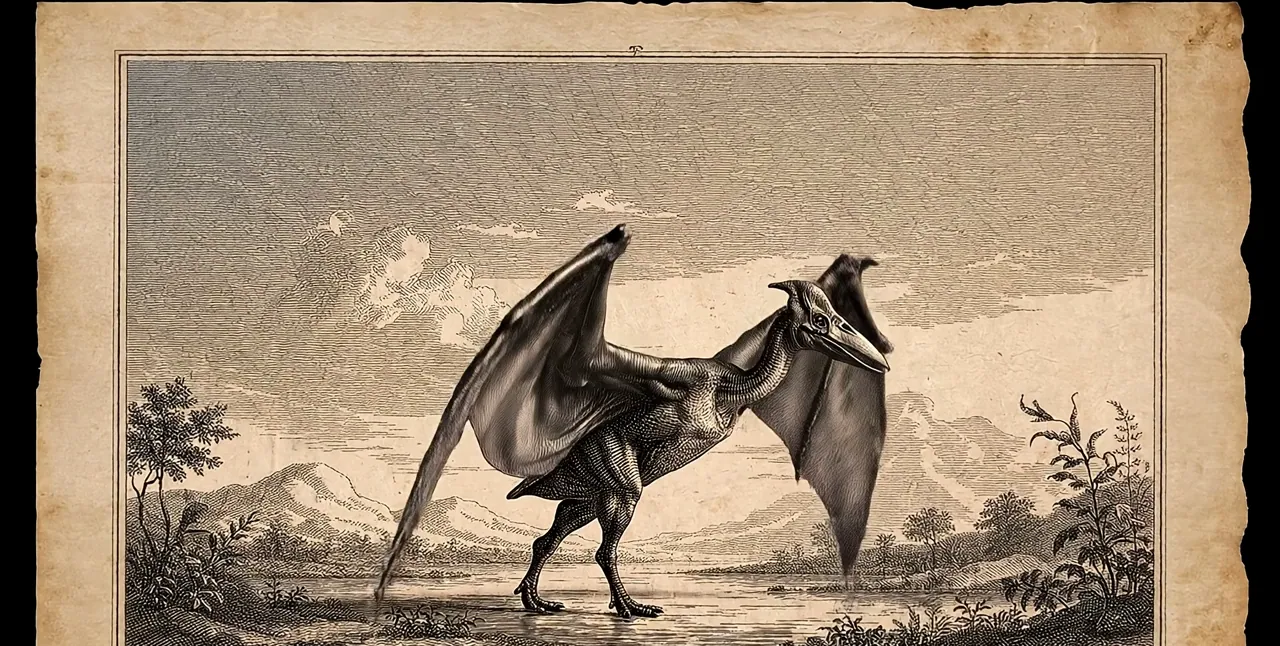
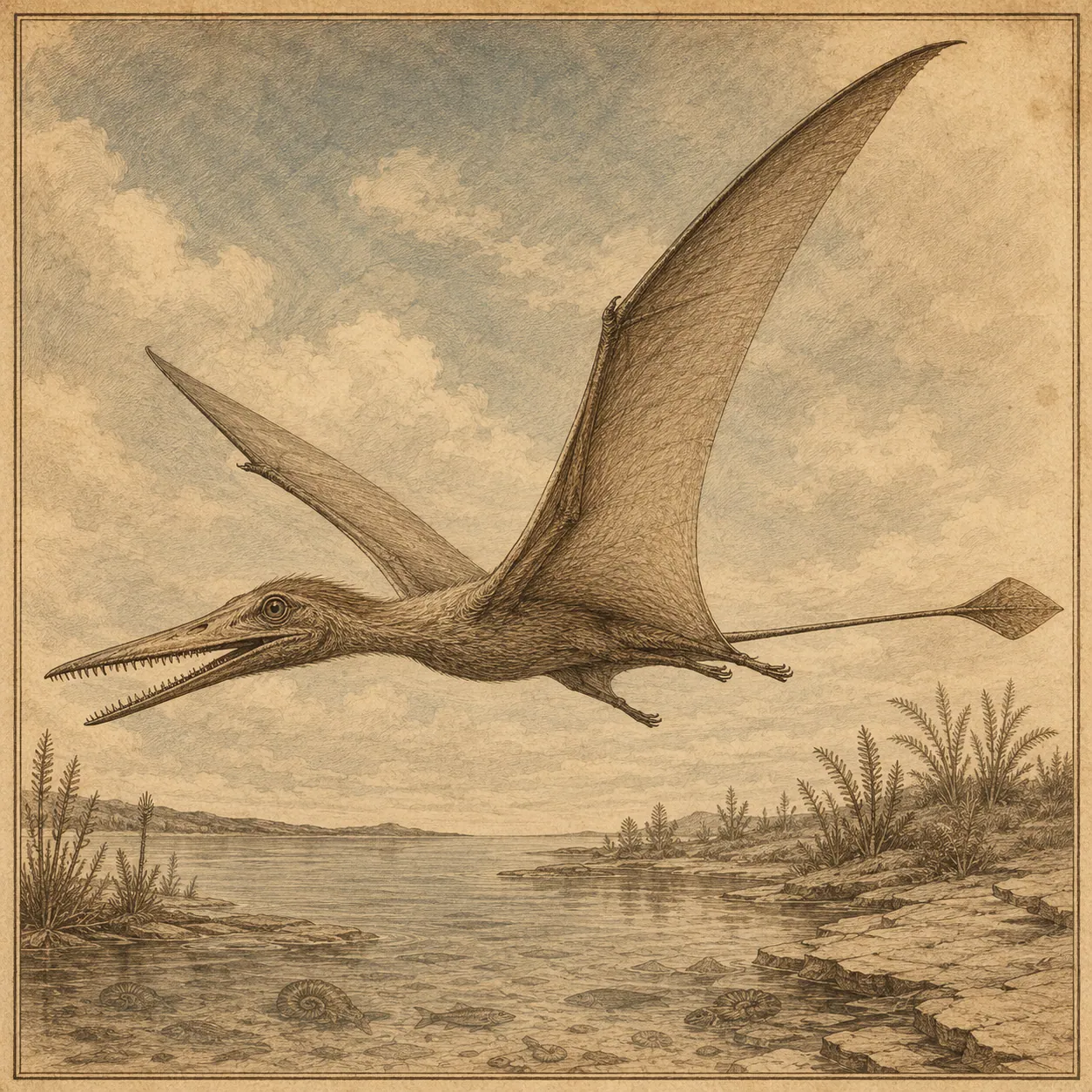
Rhamphorhynchus Pl. II · Pterosauria

Rhamphorhynchus muensteri — long-tailed Jurassic flyer, preserved with wing membrane. Lithographic plate.


Lived228 – 66 MyaLate Triassic to end-Cretaceous
GroupPterosauriaFlying archosaurs, not dinosaurs
Wingspan0.25 – 11 mSparrow to small aircraft
WingOne fingerMembrane on a giant 4th digit

§ 01What they were

Pterosaurs were flying reptiles — close cousins of the dinosaurs, but a separate branch entirely. They appear in the fossil record around 228 million years ago already fully capable of flight, which means the crucial transition happened earlier, in animals we have not yet found. By the time the curtain rises, they are airborne.

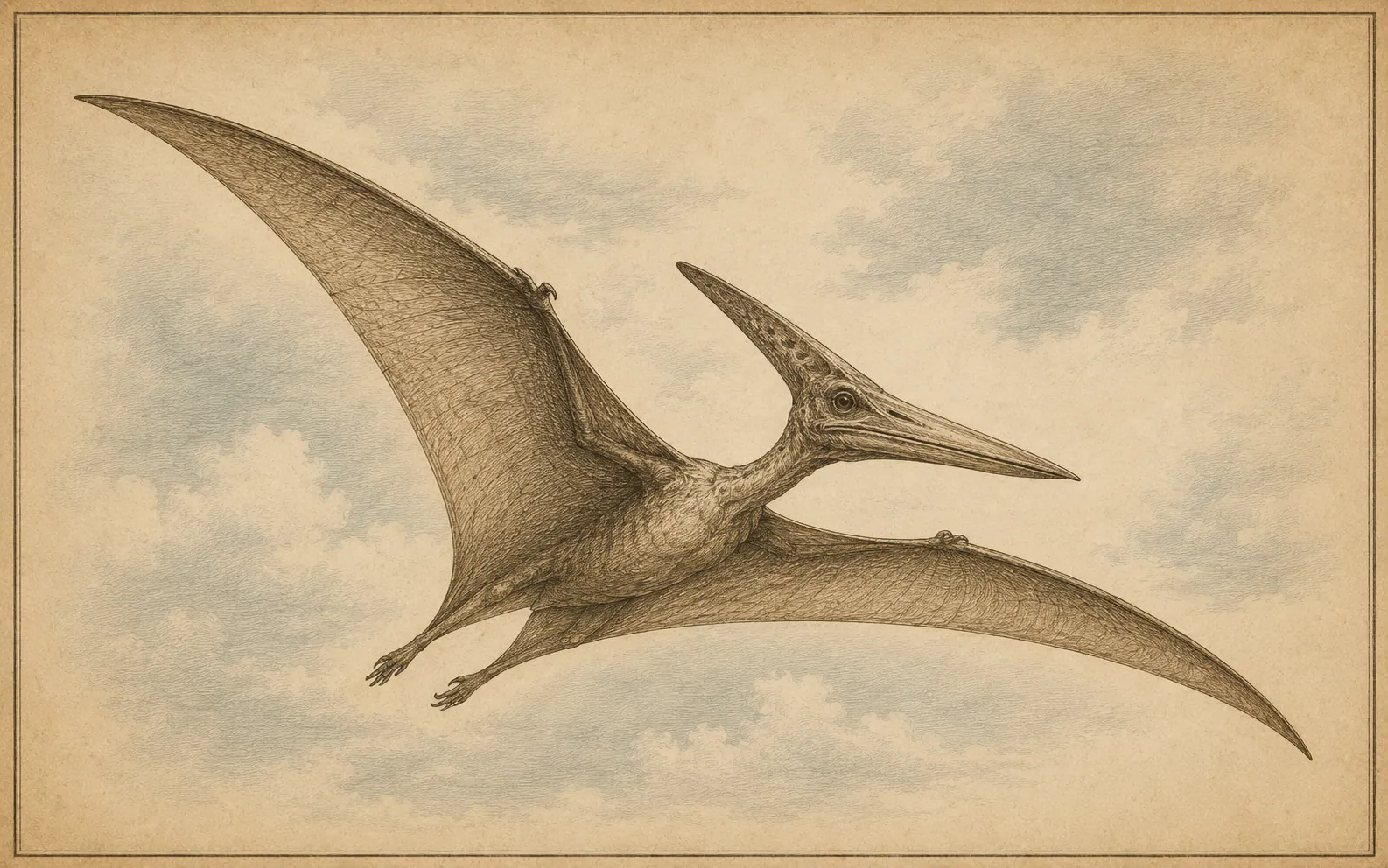
Their defining feature is the wing, and it is unlike anything alive today. Where a bird spreads its wing across an entire arm and hand, and a bat stretches skin between four long fingers, a pterosaur built its entire wing on a single, monstrously elongated fourth finger. From the tip of that finger a tough membrane — the patagium — ran back to the ankle, laced with fibres that let the animal change the wing's shape and stiffness in flight.

Built to be light

Flight is a war against weight, and pterosaurs fought it everywhere. Their bones were hollow and walled with struts, inflated by extensions of the lungs — a system of air sacs that also helped them breathe. Some giant species had skeletons that weighed only a fraction of what their size suggests. Many were covered in pycnofibres, hair-like filaments that insulated the body and tell us these were active, warm-running animals, not sluggish reptiles.

Two broad grades: the early, long-tailed "rhamphorhynchoids" of the Triassic and Jurassic, and the later, short-tailed, often spectacularly crested pterodactyloids that dominated the Cretaceous.

Crests, crests, crests

Many pterosaurs wore elaborate head crests — bony blades, soft-tissue sails, even antler-like prongs. Most were almost certainly display structures: billboards for attracting mates and signalling species, the Mesozoic equivalent of a peacock's tail. A few may have helped with steering or temperature, but show was the main business.

From insects to giants

The group spanned an astonishing range. The smallest were the size of small birds, snapping insects out of the dusk. The largest — the azhdarchids like Quetzalcoatlus — stood as tall as a giraffe with wings spanning eleven metres, and likely stalked the ground like enormous storks, plucking up prey the size of a dog.

§ 02Field Guide

A catalogue of flyers

12 specimens shown
Period
Diet
Size
QuetzalcoatlusNo. 01

Quetzalcoatlus

The tallest flyer ever found — a giraffe-sized stork of the Cretaceous floodplains.

Cretaceous11 m spanCarnivore
Full profile →
PteranodonNo. 02

Pteranodon

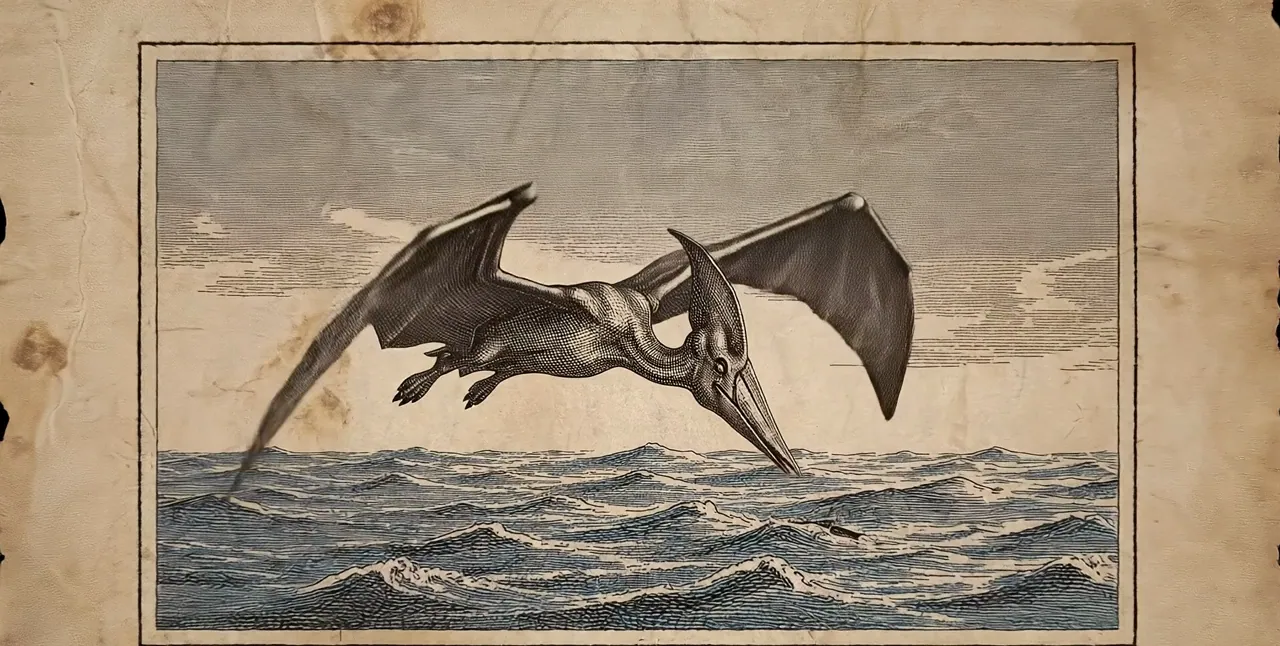
The iconic crested, toothless flyer — a fish-hunter of the great inland sea.

Cretaceous7 m spanFish
Full profile →
RhamphorhynchusNo. 03

Rhamphorhynchus

Long-tailed Jurassic flyer with needle teeth and a tail-vane rudder.

Jurassic1.8 m spanFish
Full profile →
DimorphodonNo. 05

Dimorphodon

A deep, puffin-like skull with two sizes of teeth — an Early Jurassic generalist.

Jurassic1.4 m spanInsects
Full profile →
NyctosaurusNo. 10

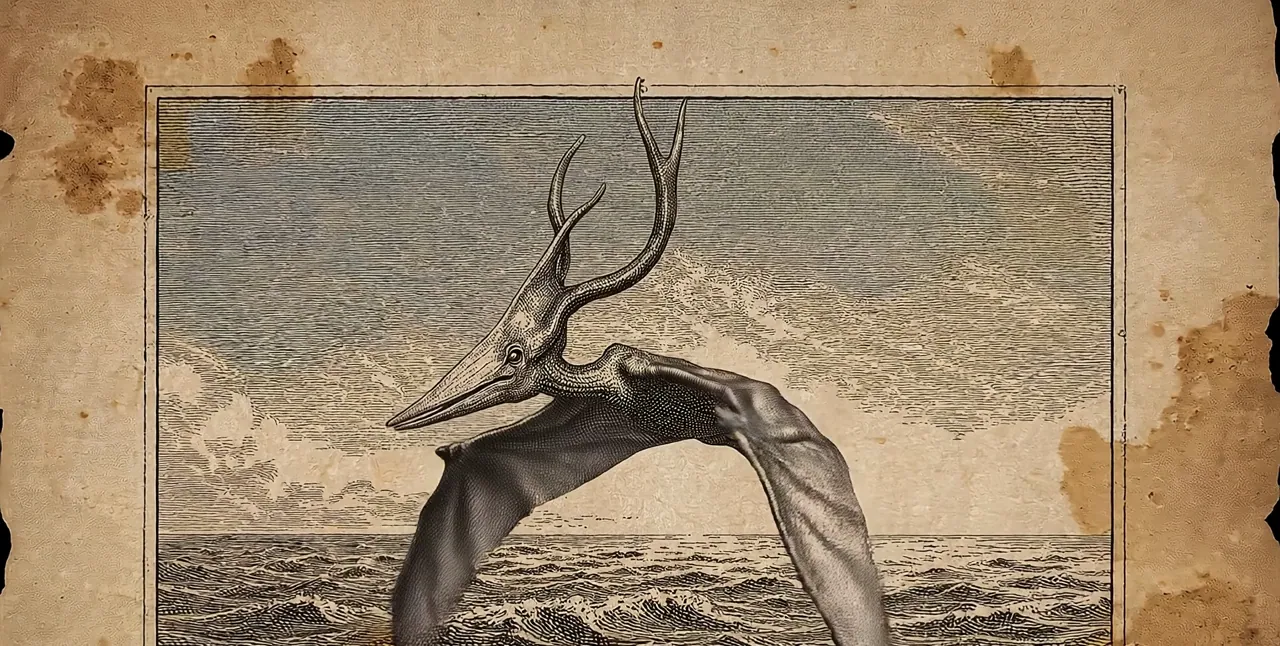
Nyctosaurus

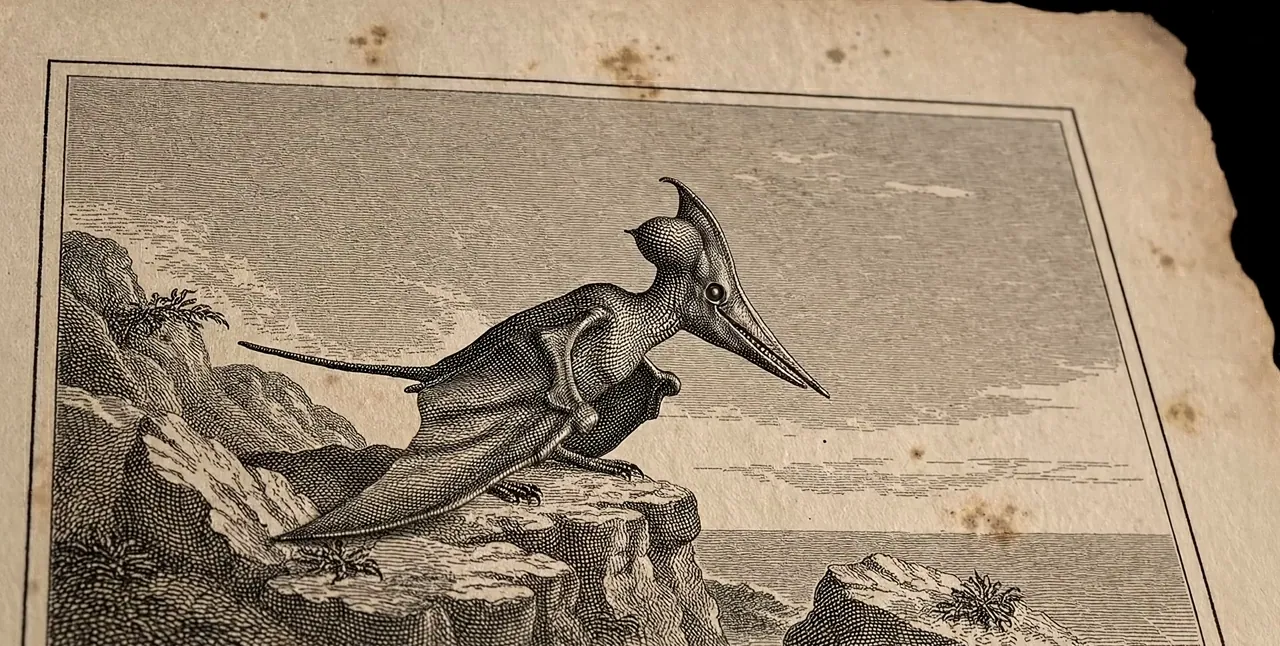
Crowned with an antler-like crest twice the length of its skull; it had lost its grasping fingers.

Cretaceous2.5 m spanFish
Full profile →
PterodactylusNo. 04

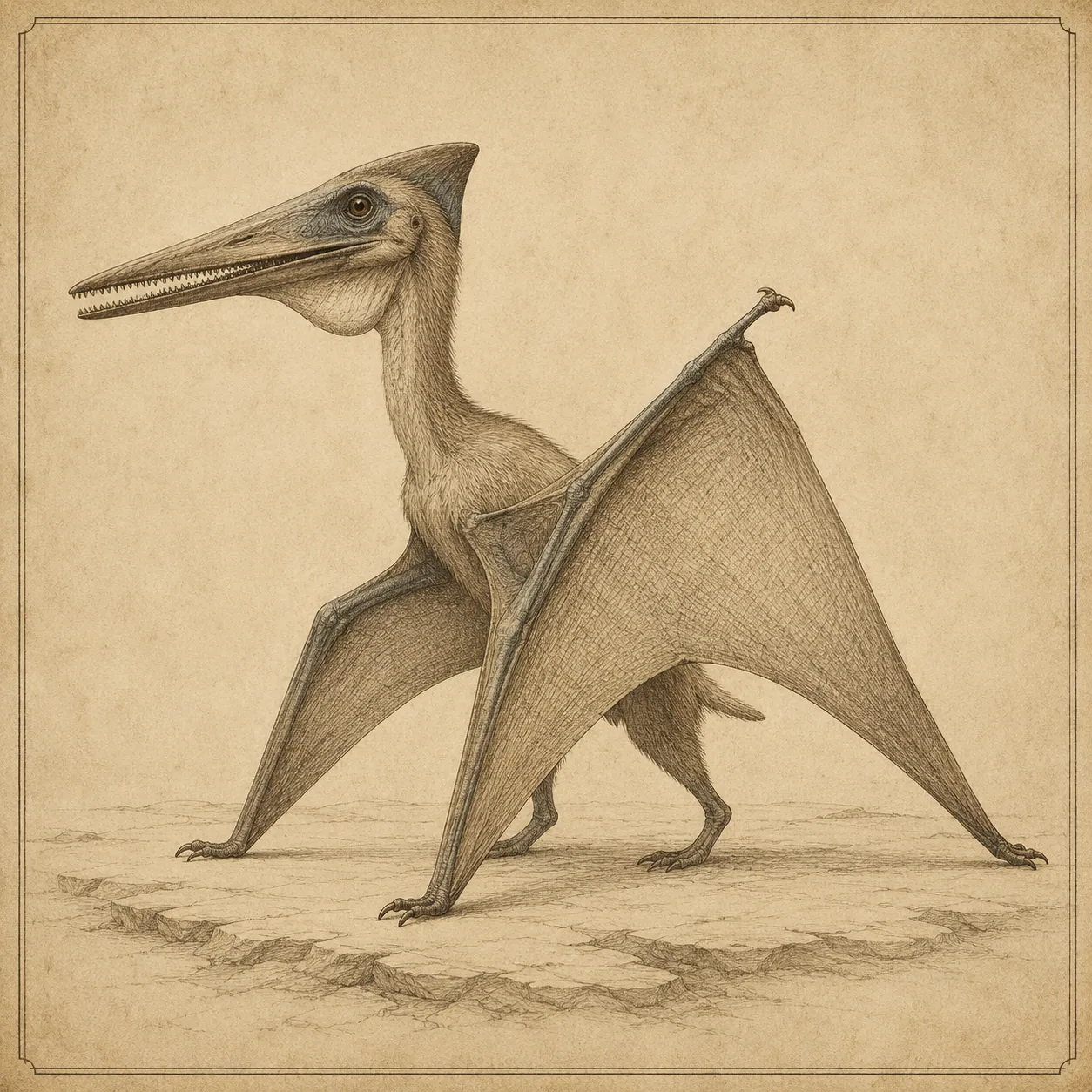
Pterodactylus

The first pterosaur ever named (1809) — small, short-tailed, the original "wing-finger".

Jurassic1.5 m spanCarnivore
Article coming soon
AnurognathusNo. 06

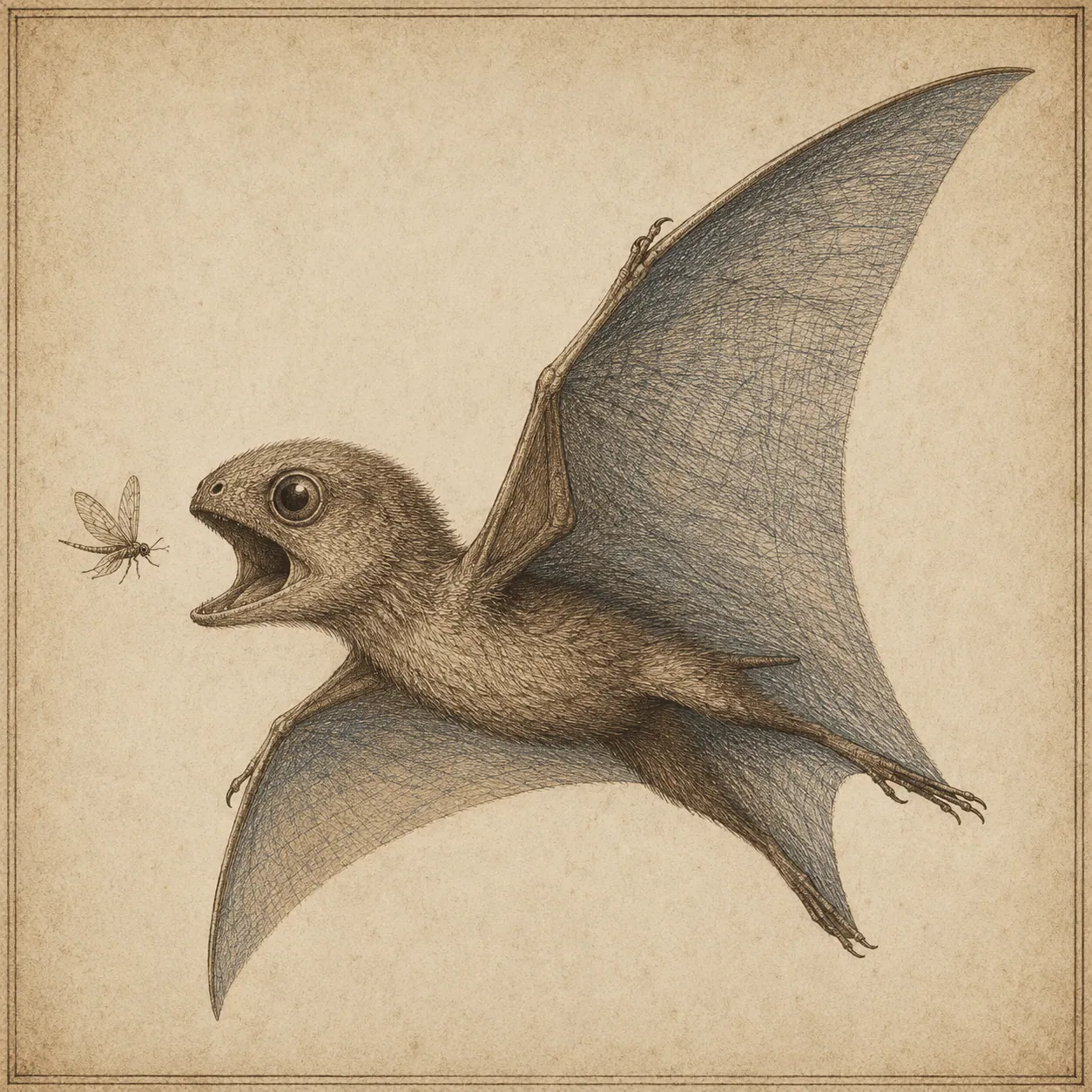
Anurognathus

A tiny, wide-mouthed, fuzzy night-flyer that hawked insects like a Mesozoic bat.

Jurassic0.5 m spanInsects
Article coming soon
TupandactylusNo. 07

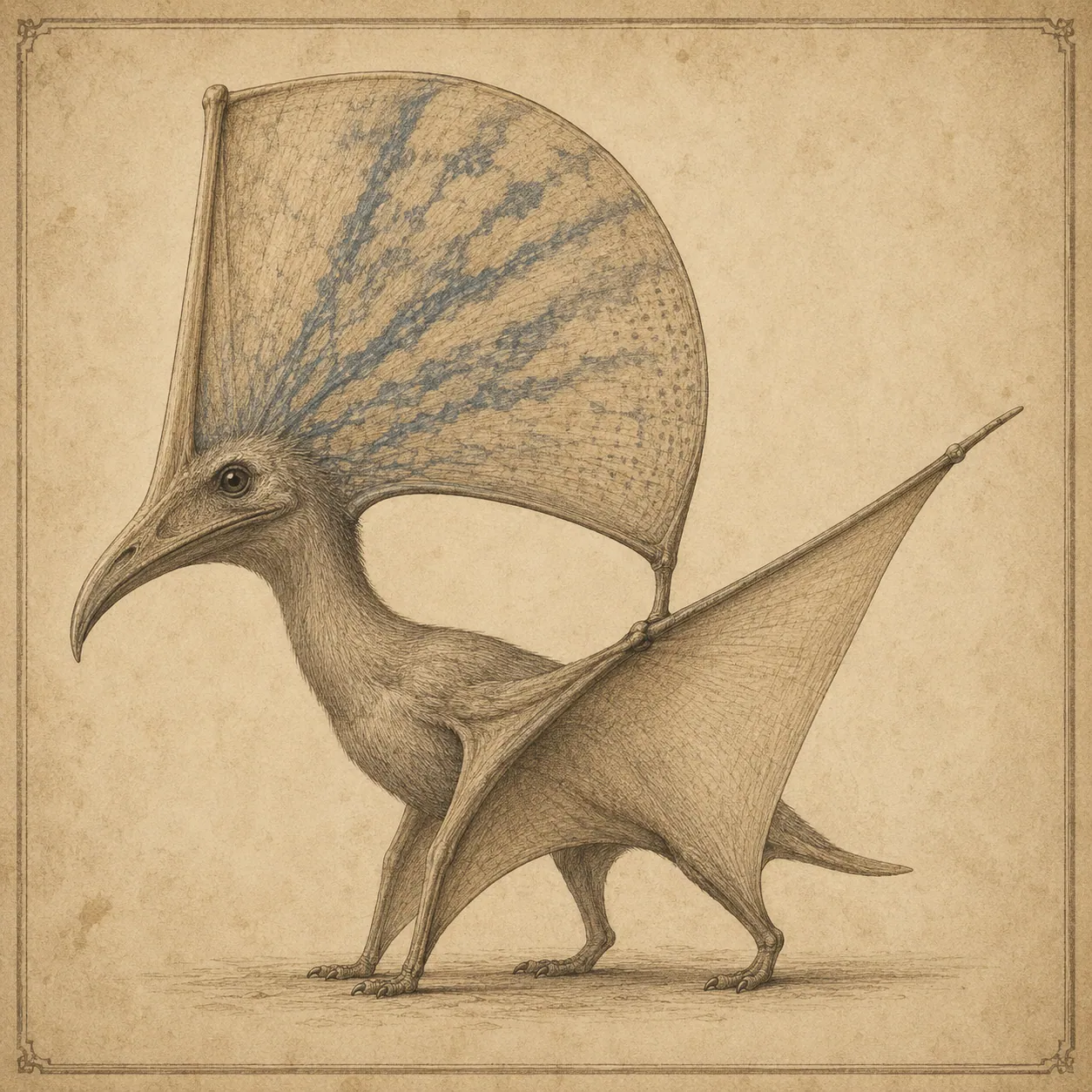
Tupandactylus

Wore an enormous semicircular head-sail — among the most extravagant crests known.

Cretaceous3 m spanFruit/plants
Article coming soon
TropeognathusNo. 08

Tropeognathus

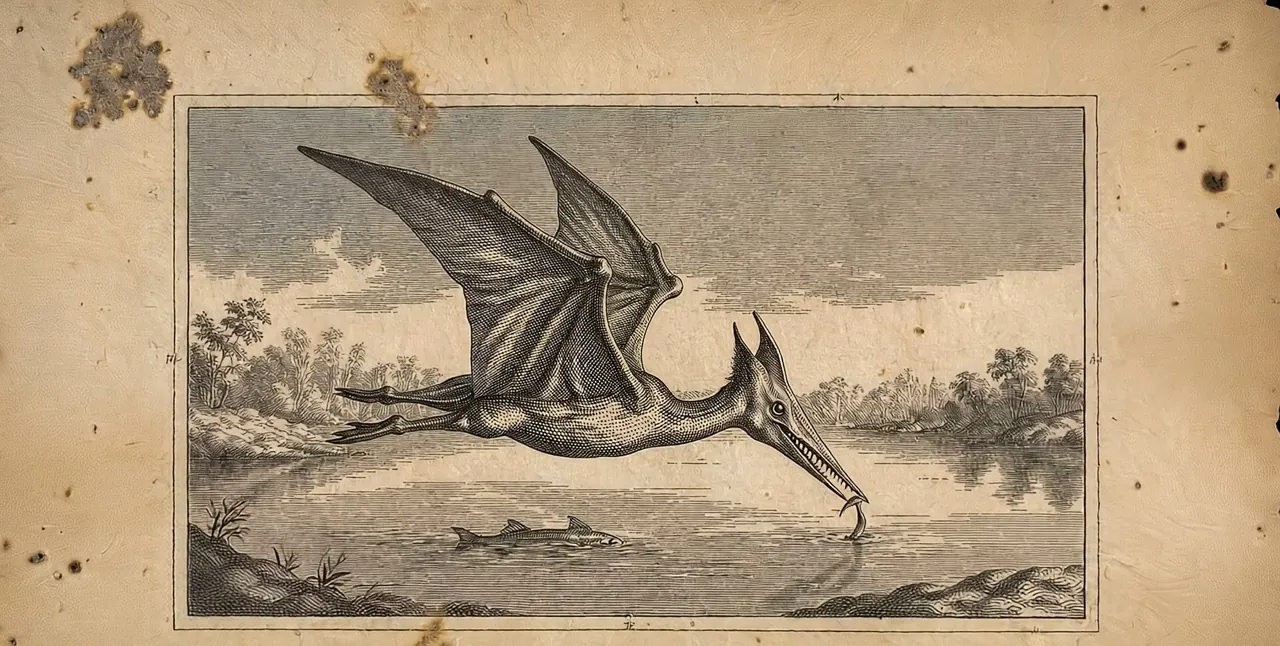
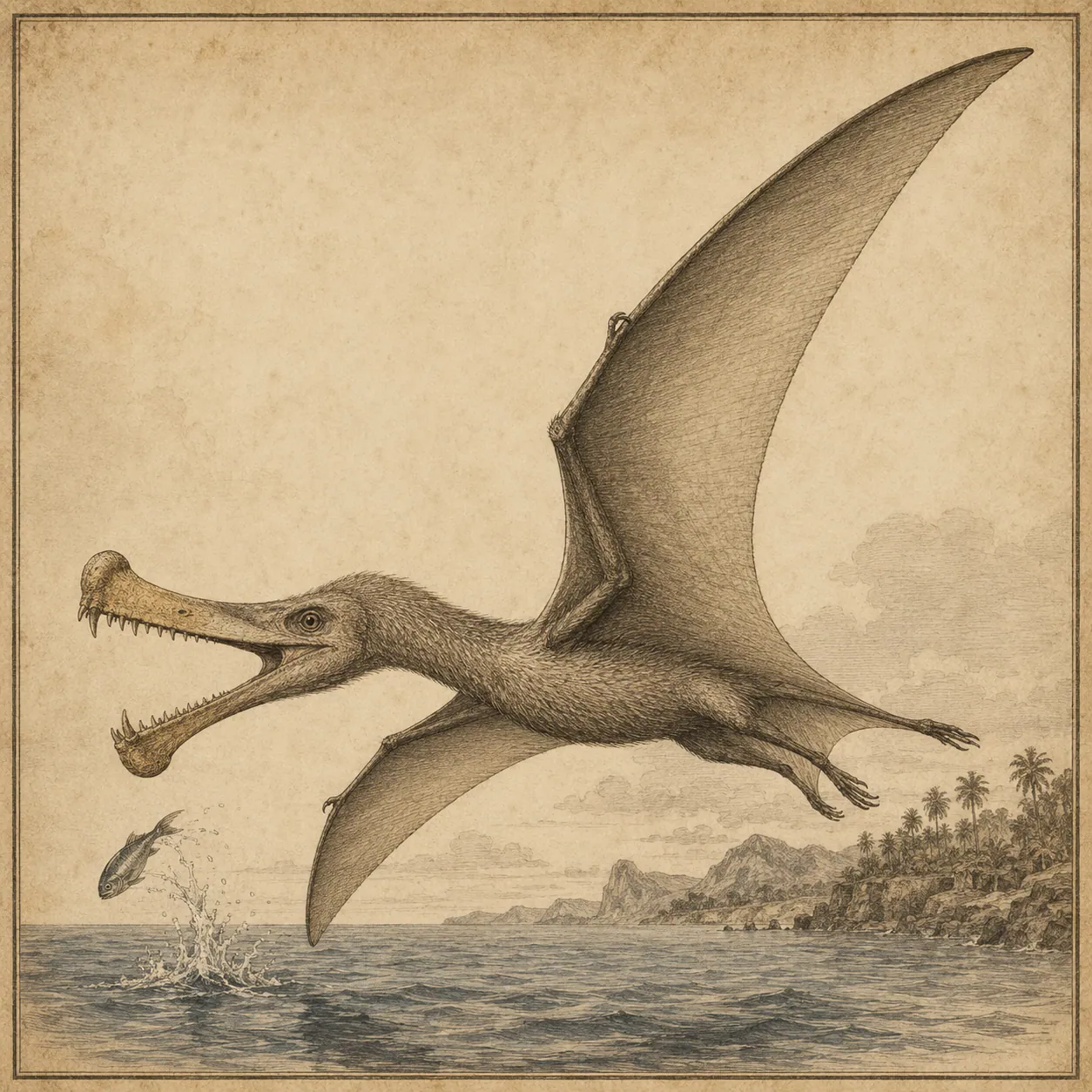
Keeled jaw-tips for snatching fish at the surface — a skim-feeding Cretaceous giant.

Cretaceous8.2 m spanFish
Article coming soon
DsungaripterusNo. 09

Dsungaripterus

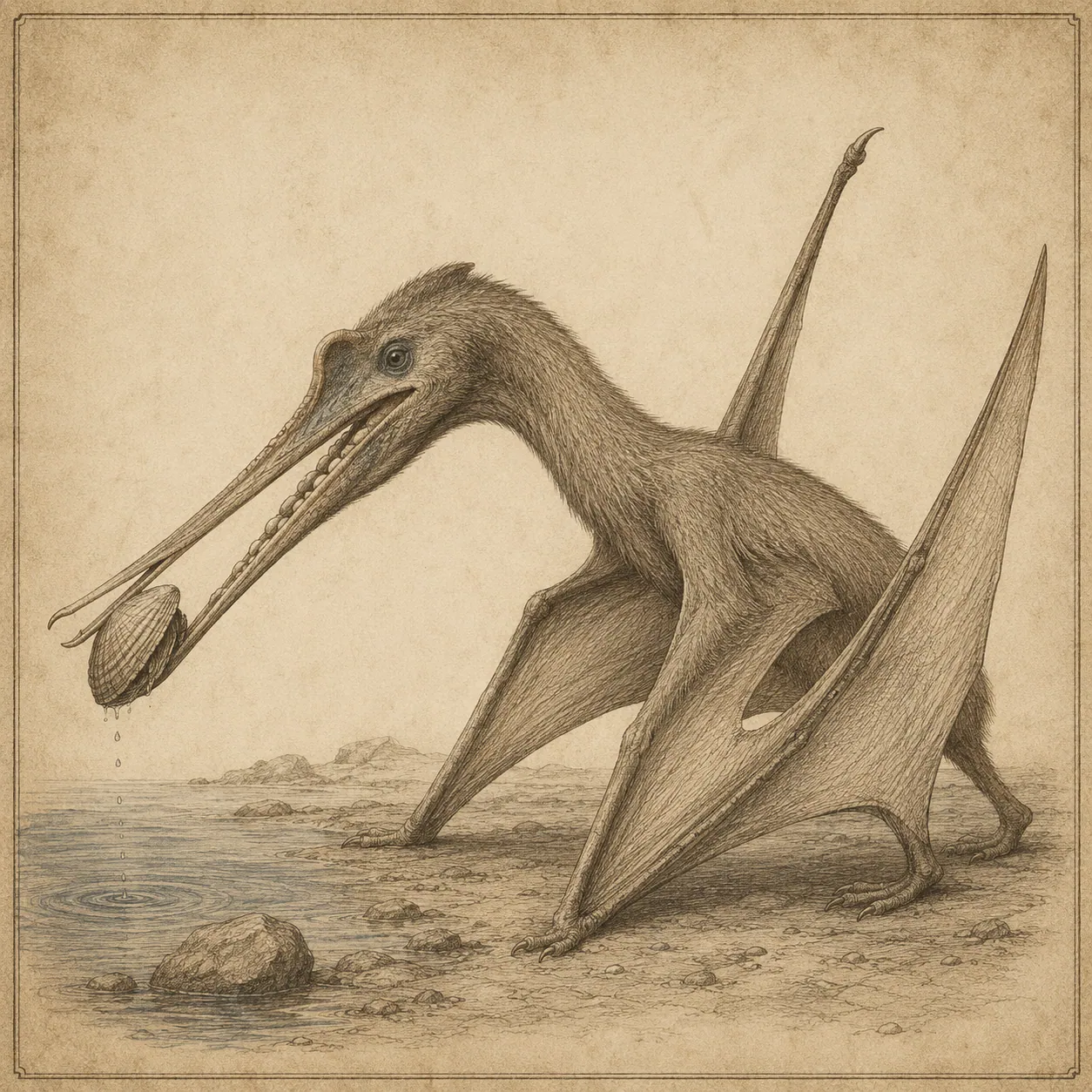
An upturned, tweezer-like beak for prising shellfish off the bottom, with crushing back teeth.

Cretaceous3 m spanShellfish
Article coming soon
HatzegopteryxNo. 11

Hatzegopteryx

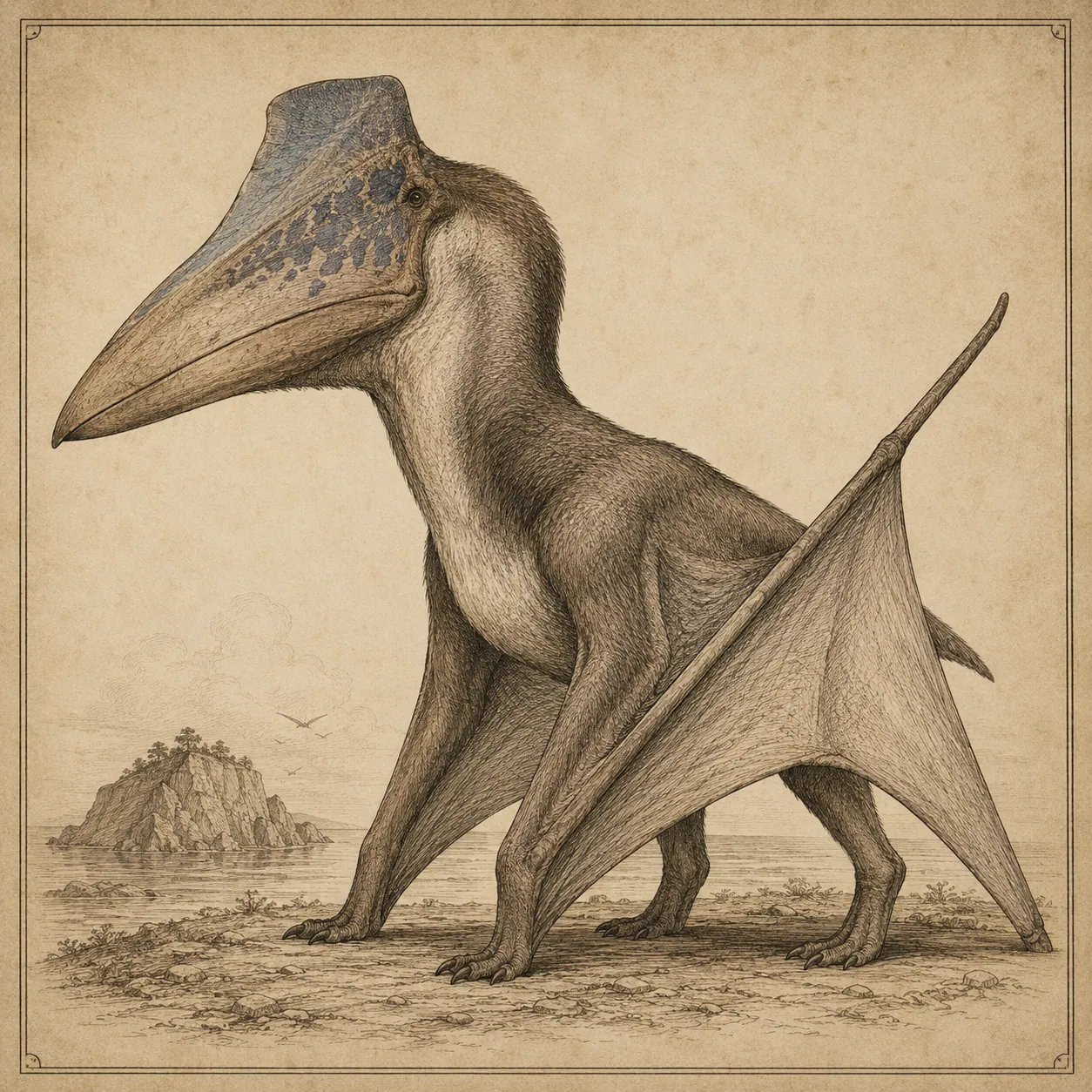
A stocky, thick-necked azhdarchid — the apex predator of an island Europe with no big dinosaurs.

Cretaceous10–12 m spanCarnivore
Article coming soon
EudimorphodonNo. 12

Eudimorphodon

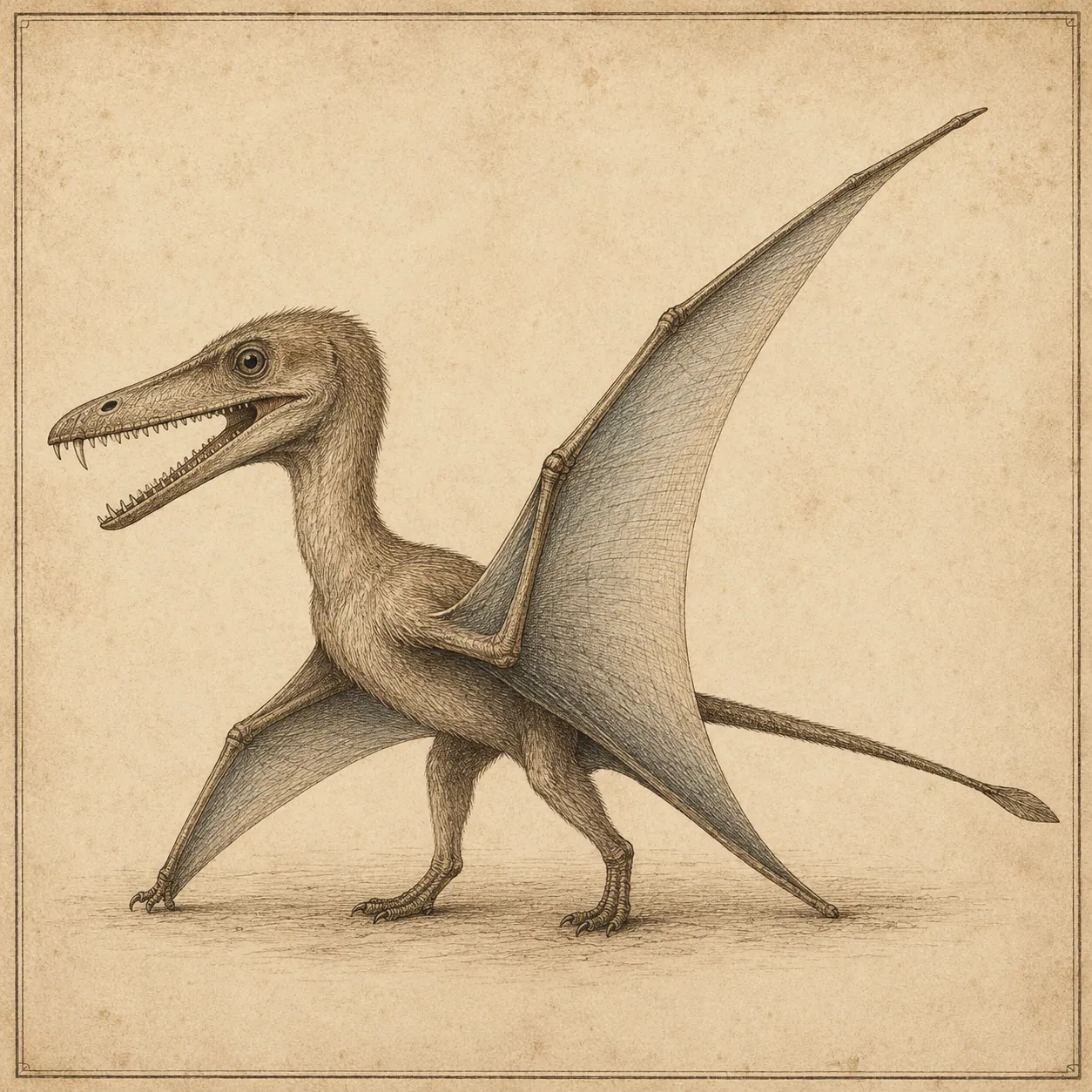
One of the earliest pterosaurs known — Triassic, with complex multi-cusped fish-catching teeth.

Triassic1 m spanFish
Article coming soon

Continue · The other realm

Now descend into the sea — the mosasaurs

MosasaurusMosasauridae